
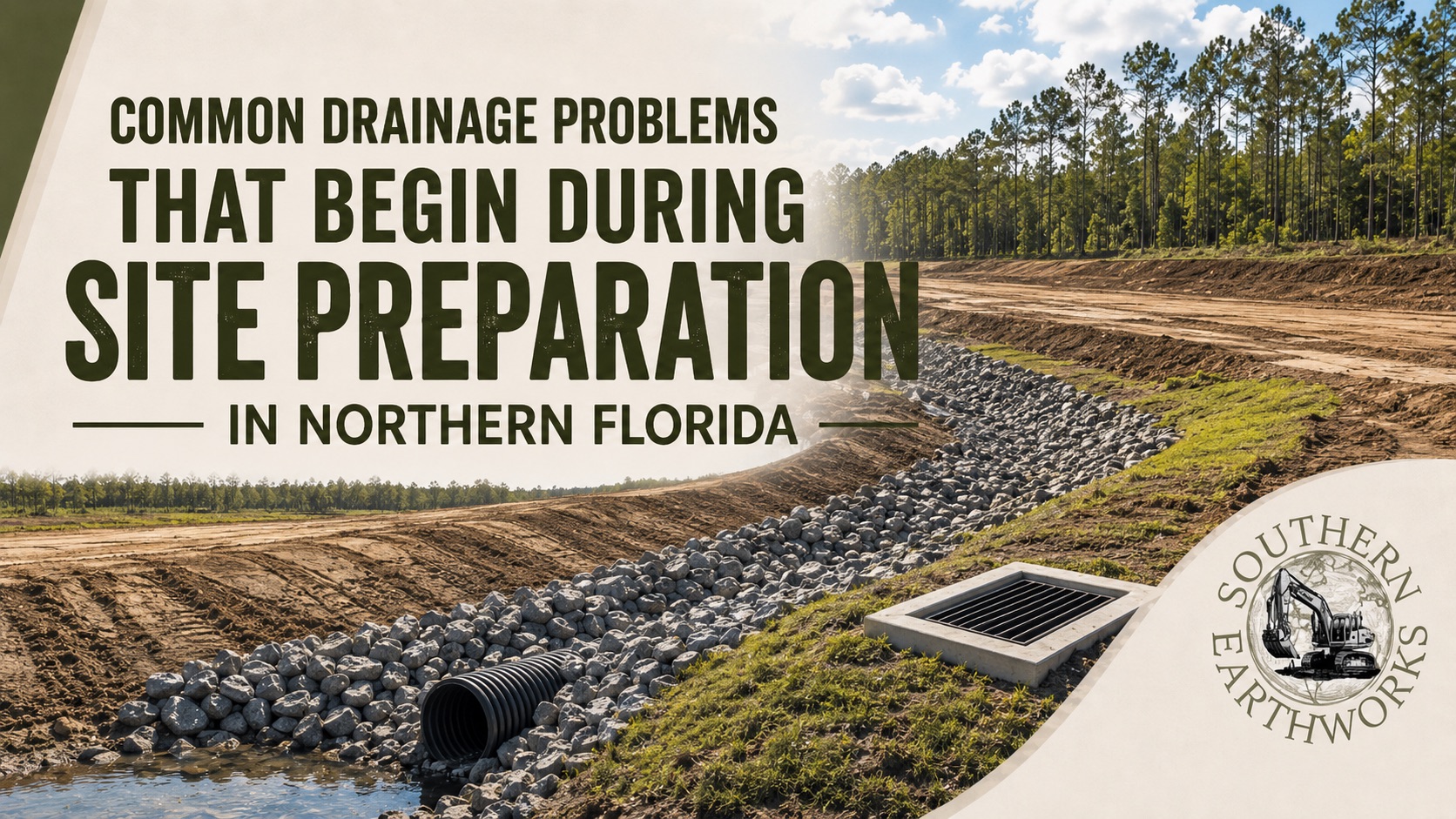
Northern Florida receives frequent heavy rain, tropical weather, and seasonal storms. When a property is not properly graded and prepared before construction begins, that rainfall can expose drainage problems that may affect foundations, landscaping, driveways, access roads, and surrounding property.
Many drainage issues do not begin after a structure is completed. They begin during the earliest stages of land clearing, excavation, grading, and site preparation.
Southern Earthworks provides professional earthwork and site preparation services throughout Northeast Florida and Southeast Georgia. Its services include land clearing, grading, excavation, soil stabilization, drainage solutions, site leveling, foundation preparation, and pad construction for residential and commercial projects.
Why Drainage Planning Matters Before Construction
Clearing land changes how water moves across a property. Trees, brush, roots, and natural ground cover previously slowed rainfall and helped water enter the soil. Once those materials are removed and the ground is disturbed, water may travel faster across exposed soil.
Development can also increase stormwater runoff by adding roofs, driveways, parking areas, patios, and other hard surfaces that prevent water from soaking into the ground. This means drainage should be considered during site preparation, not after a building, driveway, or landscape has already been installed.
Improper Site Grading
One of the most common drainage problems begins when a site is not graded to direct water toward an appropriate discharge or collection area.
A property may appear level, but even small elevation differences can determine whether water moves safely away from a building or collects beside it. Improper grading may cause standing water near foundations, saturated landscaping, soil erosion, washed-out driveways, water beneath structures, and persistent muddy areas.
Professional grading can include land leveling, slope correction, soil compaction, and preparation for drainage systems. The goal is to create a stable surface that moves water away from structures and helps prevent erosion.
Low Areas That Hold Water
Low spots may be created when heavy equipment moves across a site, soil is removed unevenly, or fill material settles.
These depressions may not appear significant during dry weather. After a heavy Northern Florida rain, they can become areas of persistent standing water. Over time, that water may contribute to unstable soil, mosquito activity, landscape damage, difficult equipment access, construction delays, and erosion around the edge of the low area.
Correcting these areas before construction is usually easier than repairing them after concrete, landscaping, fencing, or other improvements have been installed.
Soil Compaction Problems
Soil compaction is necessary for stable building pads, foundations, driveways, and access routes. However, soil that is compacted in the wrong places may prevent water from naturally entering the ground.
When water cannot infiltrate the soil, it stays on the surface or moves toward another part of the property. This can create runoff, standing water, erosion, oversaturated landscaping, and added pressure on drainage systems.
The opposite problem can also occur. Fill material that is not compacted correctly may settle unevenly. As the soil settles, it can change the intended slope of the property and create new low spots where water collects.
Proper site preparation requires the right balance between soil stability and reliable drainage.
Drainage Paths Blocked by Debris
Land clearing and construction can produce branches, stumps, loose soil, broken concrete, building materials, and other debris.
When those materials are left in ditches, swales, culverts, or natural drainage paths, they may block water and cause flooding elsewhere on the property. Stormwater can also carry loose sediment and debris into nearby drains, creeks, ponds, and waterways.
Professional cleanup and debris removal are important parts of leaving a site safe, accessible, and ready for the next phase of construction.
Drainage Swales That Do Not Work Correctly
A swale is a shallow, sloped area used to move or temporarily hold stormwater. Swales can be effective, but they must be placed at the correct elevation and built with the right slope.
A swale that is too flat may hold water instead of moving it. A swale that is too steep may cause erosion. A poorly positioned swale may direct water toward a building, road, driveway, or neighboring property.
Swale placement should be coordinated with the property’s overall grading plan, future landscaping, building elevation, soil conditions, and nearby drainage systems.
Drainage Pipes Installed Without the Proper Slope
Drainage pipes depend on proper slope, capacity, placement, and outlet conditions.
A pipe may not perform correctly if it is installed too flat, positioned above the lowest collection point, too small for the expected volume of water, crushed during construction, blocked by sediment, or discharged into an area that cannot handle the runoff.
The soil around the pipe must also be prepared correctly so the pipe stays supported and does not shift or settle over time.
Erosion Across Exposed Soil
Cleared and disturbed soil is especially vulnerable to erosion during Florida’s rainy season.
As runoff moves across an exposed site, it can carry away topsoil, cut channels into slopes, damage access roads, undermine prepared areas, and deposit sediment into drainage systems.
The Florida Department of Environmental Protection provides guidance on stormwater management and erosion control for construction sites. Property owners and contractors can review official information through the Florida Department of Environmental Protection’s construction stormwater resources.
The U.S. Environmental Protection Agency’s construction stormwater guidance also explains how sediment, debris, and pollutants from disturbed land can be carried into storm drains and waterways.
Roof and Driveway Runoff That Was Not Considered
A property may drain properly before construction but develop problems after roofs, driveways, patios, sidewalks, and parking areas are added.
These surfaces change where rainwater lands and how quickly it moves. A roof may collect a large volume of water and release it through only a few downspouts. A driveway may direct water toward a garage, street, building, or neighboring property if the finished elevation is incorrect.
Site preparation should account for the completed project, including roof runoff, downspout locations, driveway slope, parking areas, patios, retaining walls, walkways, and future landscaping.
Planning for these features early can reduce the need for regrading and corrective drainage work later.
Water Entering From Nearby Property
Drainage planning should not focus only on water that falls within the property boundaries.
Water may enter from higher neighboring land, public roads, shared driveways, adjacent developments, natural slopes, roadside ditches, or overflowing drainage systems.
When incoming water is not identified during the initial site assessment, the final grading plan may not be able to manage it. A professional evaluation should consider where the water originates, how it crosses the property, and where it can safely leave.
Building Pads Set Too Low
The building pad establishes the elevation and foundation area for a future structure. When it is set too low compared with the surrounding land, road, drainage system, or nearby properties, water may move toward the building.
A properly prepared building pad should create a stable foundation while supporting positive drainage away from the structure.
Southern Earthworks provides foundation preparation, pad construction, grading, excavation, soil stabilization, and drainage solutions as part of its earthwork and site preparation services.
Waiting Until the Project Is Complete
Drainage corrections become more difficult after a site has been fully developed.
At that point, crews may need to work around buildings, concrete, utilities, septic systems, landscaping, fences, irrigation, driveways, and parking areas.
Addressing drainage during site preparation allows elevations, slopes, water routes, soil conditions, and drainage systems to be corrected while the site is still accessible to heavy equipment.
Warning Signs of a Drainage Problem
Property owners and contractors should pay attention to water that remains long after a storm, soil washing away from slopes, channels forming in exposed ground, mud collecting on access roads, water flowing toward a future foundation, sediment building up in ditches, repeated erosion in the same location, soft soil beneath vehicles, or runoff crossing onto neighboring property.
These problems should be evaluated before the next stage of construction begins.
How Professional Site Preparation Helps
Effective site preparation begins with understanding the property, the proposed construction plan, soil conditions, and the natural direction of water flow.
Depending on the project, professional preparation may involve clearing trees, stumps, brush, and debris; establishing proper elevations; correcting slopes; filling low areas; excavating drainage paths; constructing building pads; stabilizing soil; preparing drainage systems; compacting fill correctly; and creating reliable access routes.
Southern Earthworks provides land clearing and site preparation for homeowners, builders, developers, contractors, businesses, and property managers throughout Northeast Florida and Southeast Georgia. The company is fully licensed and insured and offers professional earthwork, grading, excavation, drainage, demolition, storm cleanup, tree, and stump services.
Start Your Project on Solid Ground
Drainage problems are often easier and less expensive to prevent than to repair.
Proper grading, excavation, soil stabilization, leveling, and drainage planning can help protect your construction schedule and create a safer, more reliable site. The work completed before construction begins can affect the property for years.
Southern Earthworks can assess your property, discuss your project timeline, and provide professional site preparation, land clearing, grading, excavation, and drainage services.
Call Southern Earthworks at 904-583-9908 or request a free estimate through the Southern Earthworks contact page.



Leave A Comment