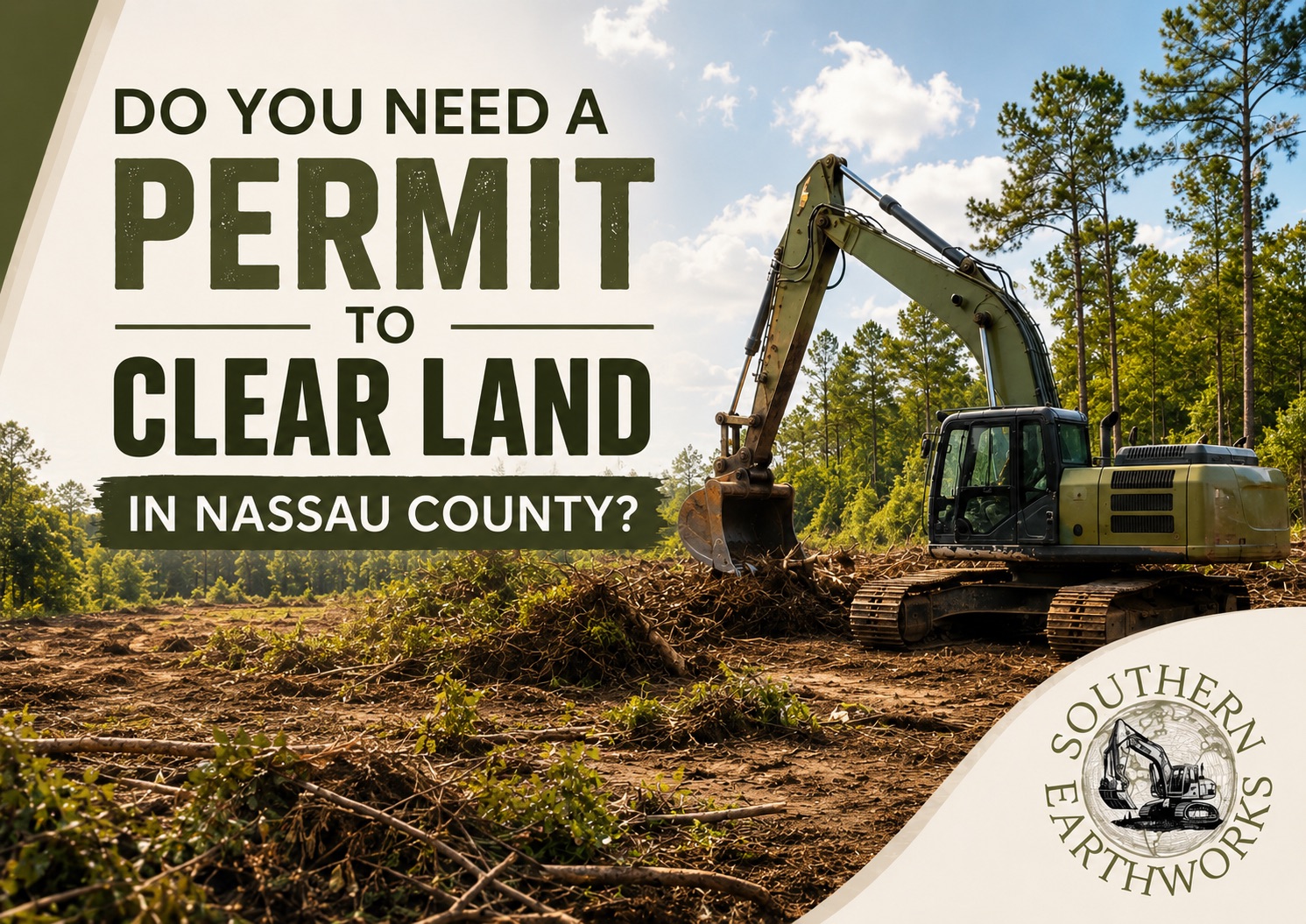
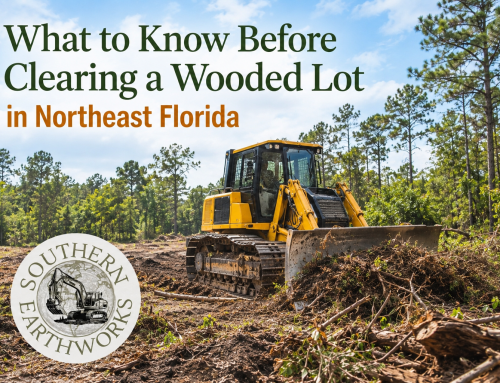
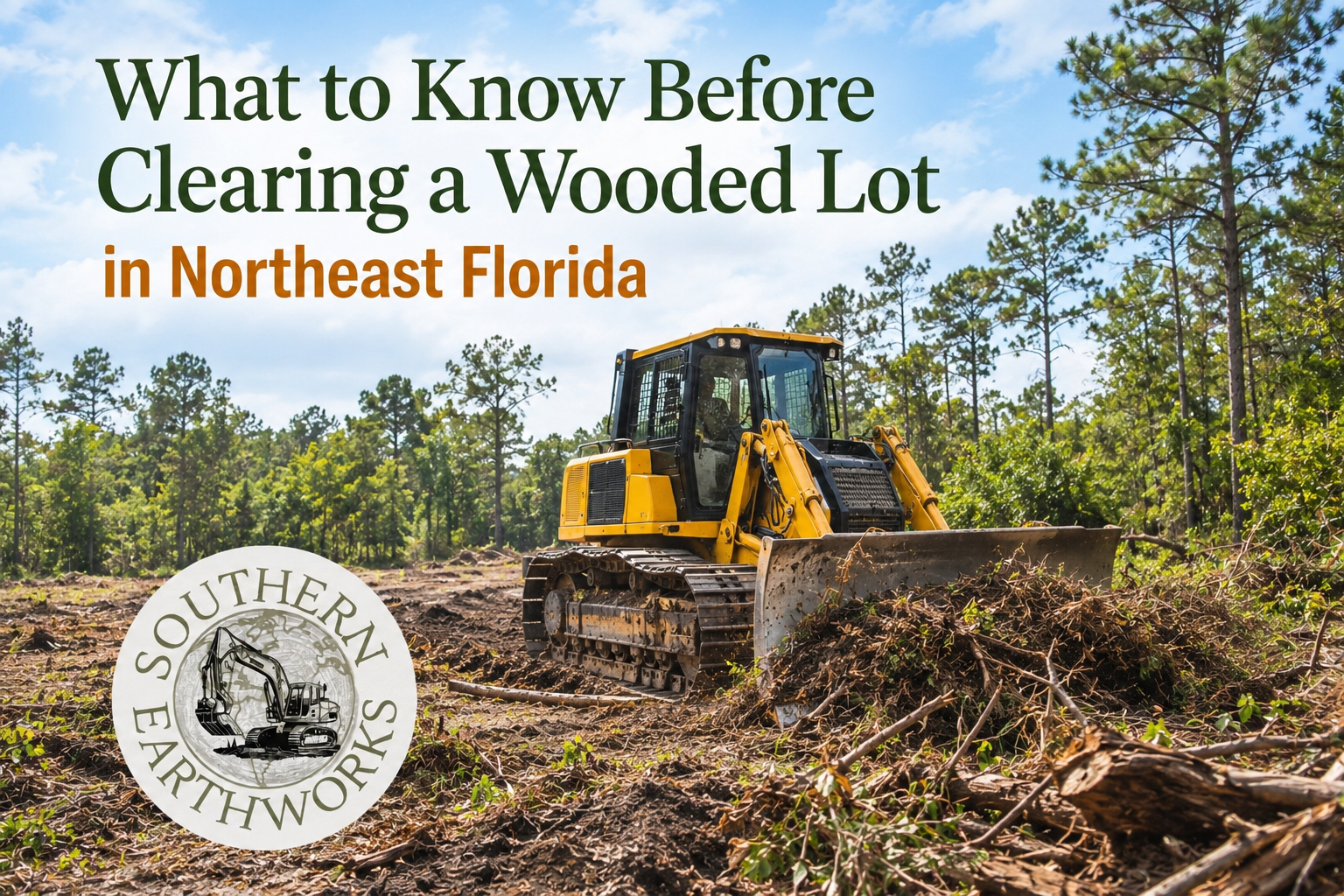
Clearing an overgrown property can be the first step toward building a home, installing a driveway, improving drainage, expanding usable space, or preparing land for sale. Before removing trees, brush, stumps, or other vegetation, property owners should determine whether permits or additional approvals are required.
In Nassau County, the answer depends on the property’s location, the type of vegetation being removed, environmental conditions, and what you plan to do with the property afterward.
Some smaller projects may not require a specific land-clearing permit. Other projects may require tree-removal approval, development review, environmental permits, erosion-control measures, burning authorization, or HOA approval.
Is a Permit Always Required?
Not necessarily. There is no single permit that applies to every land-clearing project throughout Nassau County.
Requirements may depend on:
- Whether the property is in unincorporated Nassau County or within a municipality
- Whether the property is on Amelia Island
- The size, species, health, and location of the trees
- Whether wetlands or surface waters are present
- Whether clearing is connected to construction or development
- Whether grading, filling, drainage changes, or excavation will occur
- Whether the property is governed by an HOA or deed restrictions
- Whether work will affect a road, drainage ditch, or public right-of-way
Property owners should not assume they can clear land without approval simply because it is privately owned.
Tree Removal on Amelia Island
Nassau County requires a tree-removal permit before protected trees are removed within the unincorporated portion of Amelia Island.
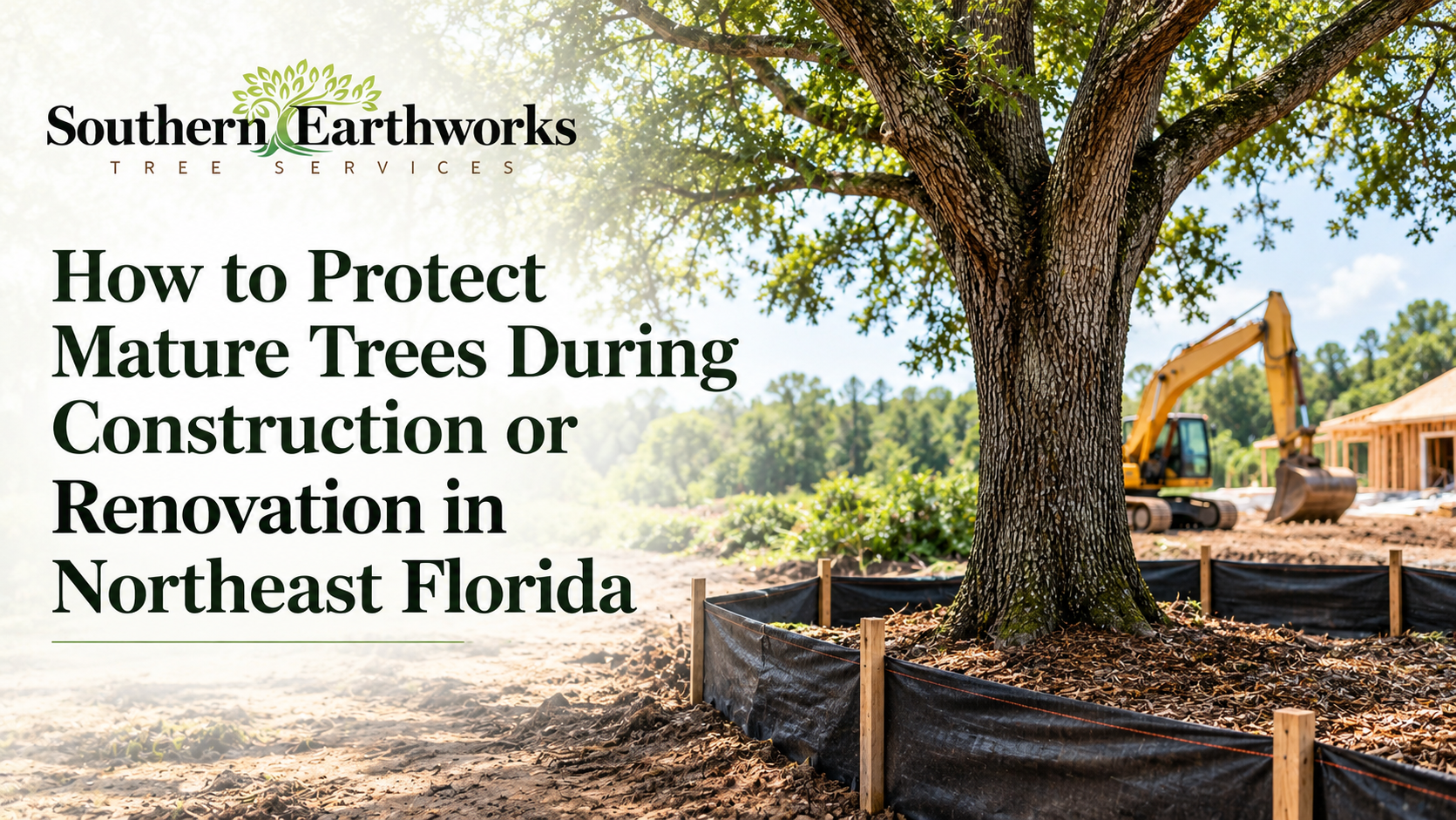
The County generally considers a healthy, non-invasive tree measuring at least five inches in diameter at breast height to be protected. Additional protections may apply to specimen live oaks and trees located along designated canopy or scenic roads.
Applications are reviewed by the Nassau County Arborist. Approval may be based on a valid reason, such as a hazardous tree or an approved development project. Removing a healthy protected tree solely for appearance may not qualify.
Property owners on Amelia Island should contact the Nassau County Planning Department before removing trees, even when the project appears minor.
Tree Removal in Fernandina Beach
Properties inside the City of Fernandina Beach are governed by city requirements rather than the rules for unincorporated Nassau County.
Fernandina Beach generally requires a permit to remove a healthy, non-invasive tree measuring five inches or more in diameter at breast height, unless an exception applies. Replacement, preservation, or mitigation requirements may also apply.
Unauthorized removal of protected trees may result in significant fines. Property owners within city limits should verify whether a tree is protected before work begins.
Hazardous, Dead, or Diseased Trees
Florida law limits when local governments can require approval to remove certain dangerous trees from qualifying residential properties.
An exemption may apply when an ISA Certified Arborist or Florida-licensed landscape architect documents that a tree presents an unacceptable risk to people or property and that removal is the only practical way to reduce that risk.
However, exceptions may still apply to specimen trees or trees along designated canopy and scenic roads. Nassau County may also request a copy of the professional tree-risk assessment for its records.
A tree should not be considered exempt based only on a homeowner’s opinion. Professional documentation can help prevent disputes or penalties.
Clearing Land for Construction
Clearing land for a house, commercial building, driveway, parking area, pond, subdivision, or other improvement may require more than tree-removal approval.
For regulated development projects, clearing may need to wait until the appropriate site plan has been approved and erosion and sediment controls are installed. Grading, excavation, drainage work, and the placement of fill may also require review.
Development review may address:
- Site layout
- Driveway access
- Stormwater drainage
- Erosion control
- Tree preservation
- Utilities
- Grading and fill
- Wetland impacts
- Construction sequencing
Clearing before a development plan is approved can create expensive problems if trees, buffers, drainage areas, or environmental features were required to remain.
Wetlands and Drainage Concerns
Wetlands are common throughout Northeast Florida, and they are not always easy to identify. A wooded or seasonally dry area may still qualify as a regulated wetland or surface-water feature.
Clearing, filling, excavation, grading, and drainage changes may require authorization through Florida’s Environmental Resource Permitting program when the work affects wetlands, surface waters, or stormwater flow.
Additional review may be required if the project:
- Clears or fills wetlands
- Alters a creek, pond, ditch, marsh, or other surface water
- Changes the direction or amount of stormwater runoff
- Places fill near regulated waters
- Affects drainage beyond the property boundary
When wetlands may be present, a qualified environmental professional can help determine their location. Do not begin clearing or filling a suspected wetland until the appropriate agencies have been contacted.
Does an HOA Have to Approve Land Clearing?
Possibly. A county or city permit does not replace private HOA approval.
An HOA may have covenants or architectural standards covering tree removal, natural vegetation, drainage changes, landscaping, driveways, structures, conservation areas, or the use of heavy equipment.
Property owners should review their community’s:
- Declaration of covenants
- Architectural guidelines
- Recorded plat
- Landscaping standards
- Conservation-area restrictions
Written approval should be obtained when required. A government permit does not automatically authorize work prohibited by an HOA, and HOA approval does not replace government permits.
Roads, Rights-of-Way, and Utilities
Separate approval may be required when clearing affects a public road, drainage ditch, sidewalk, culvert, driveway connection, or right-of-way.
Before clearing near a road, confirm the property boundary and the location of the public right-of-way. Vegetation that appears to be on private property may actually be located on public land.
Property owners should also contact the appropriate utility provider before removing trees or operating equipment near power lines or utility easements.
Can You Burn the Cleared Debris?
Permission to clear land does not automatically include permission to burn vegetation.
Land-clearing burns, pile burns, acreage burns, and similar activities may require authorization from the Florida Forest Service. Setback requirements, drought restrictions, local ordinances, and HOA rules may also apply.
Burning household garbage, treated wood, plastics, tires, paint containers, and similar materials is illegal. Hauling, grinding, mulching, or professional debris removal may be a safer option.
Check Before You Clear
Before beginning a land-clearing project, confirm:
- Whether the property is inside a city or unincorporated Nassau County
- Whether protected trees are present
- Whether wetlands, buffers, easements, or conservation areas exist
- Whether grading or drainage will be changed
- Whether construction or development approval is required
- Whether an HOA must approve the project
- Whether work will affect a road or right-of-way
- How vegetation and debris will be removed
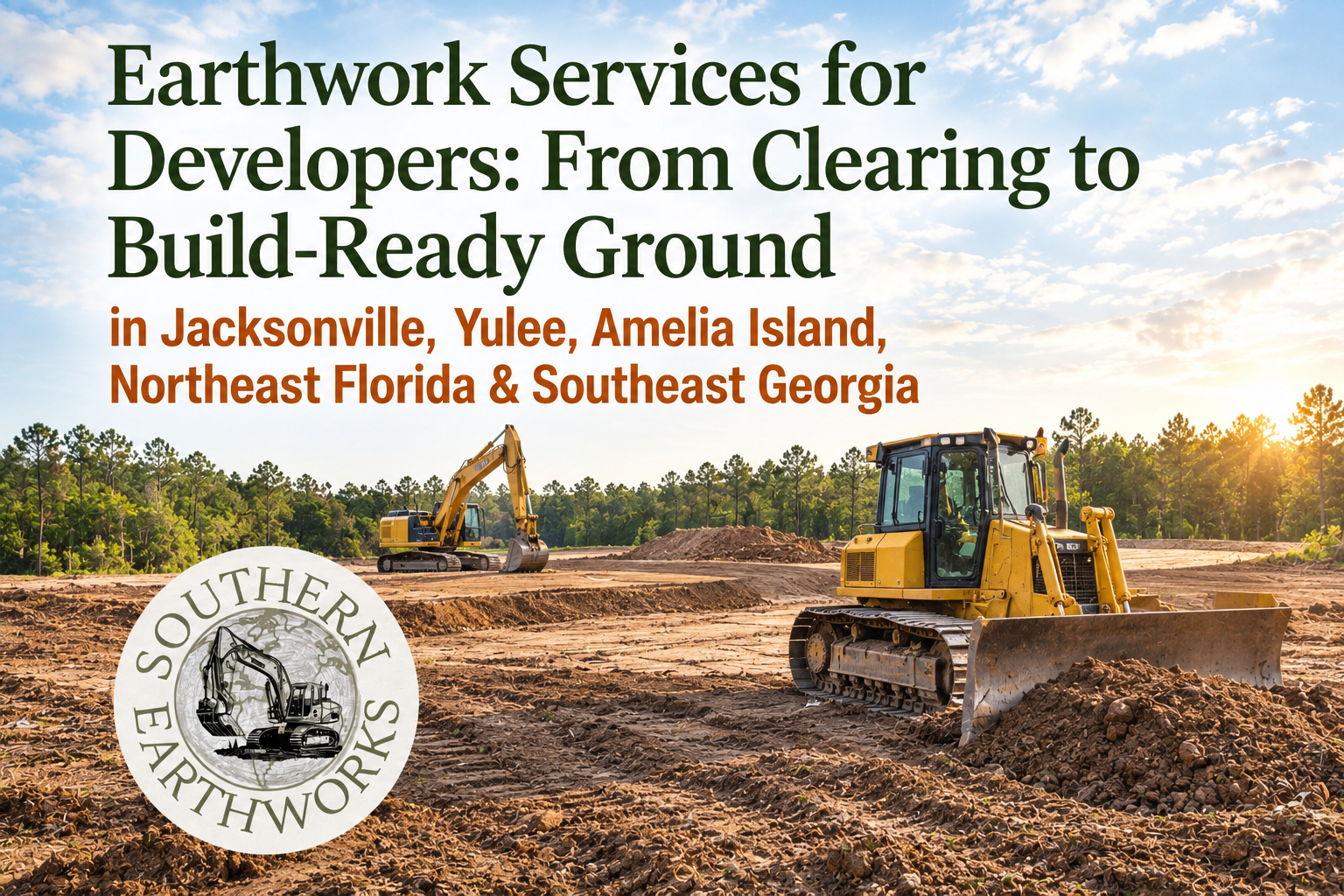
Southern Earthworks provides professional land clearing, grading, excavation, drainage work, debris removal, and site preparation throughout Northeast Florida.
Call Southern Earthworks at 904-583-9908 to discuss your Nassau County property and request an estimate.
This article provides general information and is not legal, engineering, environmental, or permitting advice. Requirements vary by property and may change. Confirm current rules with Nassau County, the applicable municipality, environmental agencies, utility providers, and your HOA before beginning work.


Leave A Comment