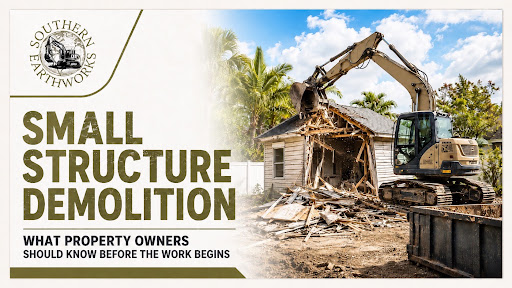
Removing an old shed, detached garage, barn, small outbuilding, damaged structure, or unwanted concrete feature may look simple from the outside, but a successful demolition project usually requires more planning than most property owners expect. At Southern Earthworks, we help homeowners, builders, contractors, and businesses throughout Nassau County and Northeast Florida prepare properties for what comes next. Small structure demolition can be an important part of clearing a lot, preparing for new construction, removing storm-damaged structures, or simply reclaiming space that is no longer being used, and the best results usually come from thinking through the entire process before any equipment arrives.
Before demolition begins, we look at more than just the building itself. Access, utilities, debris, surrounding structures, site conditions, existing slabs or foundations, and the intended use of the property afterward can all influence how the job should be approached. A structure that appears easy to remove can become more complicated if it is located close to a home, septic system, fence, driveway, overhead line, or another feature that needs to remain protected.
Start With a Clear Plan for What Is Being Removed
The first step in any small building demolition project is defining exactly what needs to come down and what should remain. Some projects involve only a single detached shed, while others may include a barn, old garage, deteriorated outbuilding, small commercial structure, concrete slab, fencing, or other improvements on the property. Understanding the full scope helps determine what equipment may be needed, how much debris is likely to be generated, and how the demolition should be staged.
We also want to understand what the property owner plans to do with the area afterward. Removing a structure so the land can be landscaped is different from removing one so a new building, driveway, foundation, or other improvement can be installed. That next step matters because demolition and site preparation often go hand in hand, and planning for both from the beginning can make the project more efficient.
Utilities Need to Be Identified Before Demolition Starts
One of the most important parts of demolition planning is determining whether the structure is connected to utilities. Electrical lines, water service, sewer or septic connections, gas lines, communication cables, and other underground or overhead utilities may be present even around smaller buildings. These systems need to be identified and properly addressed before demolition work begins.
A structure that appears disconnected may still have buried lines or old service connections that are not immediately visible. For property owners in Nassau County, Fernandina Beach, Yulee, and surrounding Northeast Florida communities, careful planning around utilities helps reduce unnecessary risk and prevents avoidable damage elsewhere on the property. This is one of the reasons why professional demolition should begin with a site assessment rather than assumptions about what is or is not present.
Access Can Determine How the Demolition Is Performed
Heavy equipment needs room to work, and access can have a major influence on how a demolition project is completed. Gates, trees, fences, neighboring buildings, septic systems, landscaping, overhead lines, narrow driveways, and soft ground can all affect how equipment reaches the work area and how debris is removed from the site.
A structure in the middle of an open property is very different from a shed tucked behind a home with limited side-yard access. In tighter spaces, smaller equipment or a more controlled demolition approach may be necessary to protect the surrounding property. Good access planning also helps make cleanup more efficient, which can reduce unnecessary disturbance to the rest of the site and help keep the project moving smoothly.
The Condition of the Structure Matters
Not every building comes down the same way, and the condition of the structure is an important part of determining how demolition should proceed. An old wood shed that is already deteriorating presents different challenges than a block structure, metal building, barn, or garage with a concrete foundation. Storm-damaged structures can be especially unpredictable because walls, roofs, and framing may already be unstable.
Before equipment begins working, the structure should be evaluated so the demolition method matches both its condition and its construction. At Southern Earthworks, we approach demolition as part of a larger site-work process. The goal is not simply to knock something over, but to remove the structure efficiently while protecting surrounding features and preparing the property for its next use.
What Happens to All the Demolition Debris?
Removing the structure is only part of the job. Once demolition begins, materials such as wood, roofing, metal, concrete, siding, insulation, framing, and other debris need to be collected and removed from the site. Debris management is an important part of professional demolition because leaving piles of material behind can create additional work for the property owner and delay whatever is planned next.
The amount and type of debris can vary significantly depending on the structure. A lightweight shed may generate a relatively small amount of material, while an older garage, barn, or masonry structure can create a much larger cleanup project. When planning demolition, property owners should think about the entire process, including removal and cleanup, rather than only the moment when the building comes down.
Concrete Slabs and Foundations May Need to Be Removed Too
Many small structures sit on concrete slabs or other foundation materials, and those features may also need to be removed depending on what is planned for the property. If the goal is to completely clear the site for new construction, landscaping, grading, drainage improvements, or another use, leaving an old slab in place may create problems later.
Concrete removal can become an additional part of the demolition process, especially when the existing foundation interferes with future site work. This is another reason it helps to know what is happening with the property after demolition. If a builder is preparing the area for a new structure, the land may need additional excavation, grading, or site preparation after the building and foundation are gone.
Demolition Is Often the Beginning of a Larger Site Preparation Project
For many property owners, demolition is not the final step. It is the first step toward something new. An old shed may be removed so a larger garage can be built, a damaged barn may need to come down before a new structure can be constructed, or an outdated building may be removed as part of a larger land-clearing or development project.
Once the structure is gone, the area may need grading, excavation, drainage work, debris removal, or other site preparation. At Southern Earthworks, this is where our broader earthwork experience becomes especially valuable. We can look beyond the demolition itself and help prepare the property for the next phase of the project instead of leaving the site only partially completed.
Grading May Be Needed After Demolition
Once a structure and its foundation are removed, the ground beneath it may not be ready to use immediately. There may be low areas, disturbed soil, leftover material, or changes in drainage that need to be addressed before the property can move forward.
Proper grading can help create a more usable site and direct water away from areas where it could create problems. This is especially important in Northeast Florida, where heavy rainfall can quickly expose low spots and drainage issues. If the demolition area will eventually become part of a yard, driveway, building site, or another improvement, grading should be considered as part of the overall plan rather than as an afterthought.
Older Structures May Require Additional Precautions
Older buildings can contain materials that require special consideration before demolition. The age of the structure, how it was built, and what materials were used can all affect the demolition process, which is why property owners should avoid assuming that every old structure can simply be demolished immediately.
Depending on the structure and scope of work, additional evaluation or professional testing may be appropriate before demolition begins. Planning early can help prevent surprises once equipment is on-site and can make it easier to determine the safest and most practical way to remove the building.
Permits and Local Requirements Should Be Checked
Demolition requirements can vary depending on the property, structure, location, and scope of the project. Before demolition begins, property owners should determine whether permits, utility disconnections, inspections, or other local requirements apply.
A small shed and a larger detached garage may not be treated the same way, and local rules can vary from one jurisdiction to another. If you are planning demolition in Nassau County, Fernandina Beach, Yulee, or another Northeast Florida community, it is worth confirming the applicable requirements before scheduling the work so the project can proceed without unnecessary delays.
Demolition Near Other Structures Requires Extra Care
Small structure demolition often takes place close to homes, businesses, fences, trees, pools, driveways, or neighboring properties. That makes controlled equipment operation especially important because the goal is to remove the unwanted structure without creating unnecessary damage elsewhere on the site.
A professional demolition contractor should consider how the structure will come down, where debris will fall, how equipment will move, and which surrounding areas need to be protected. This is particularly important on residential properties where space may be limited and where existing landscaping or structures are expected to remain intact.
Storm-Damaged Structures Should Not Be Ignored
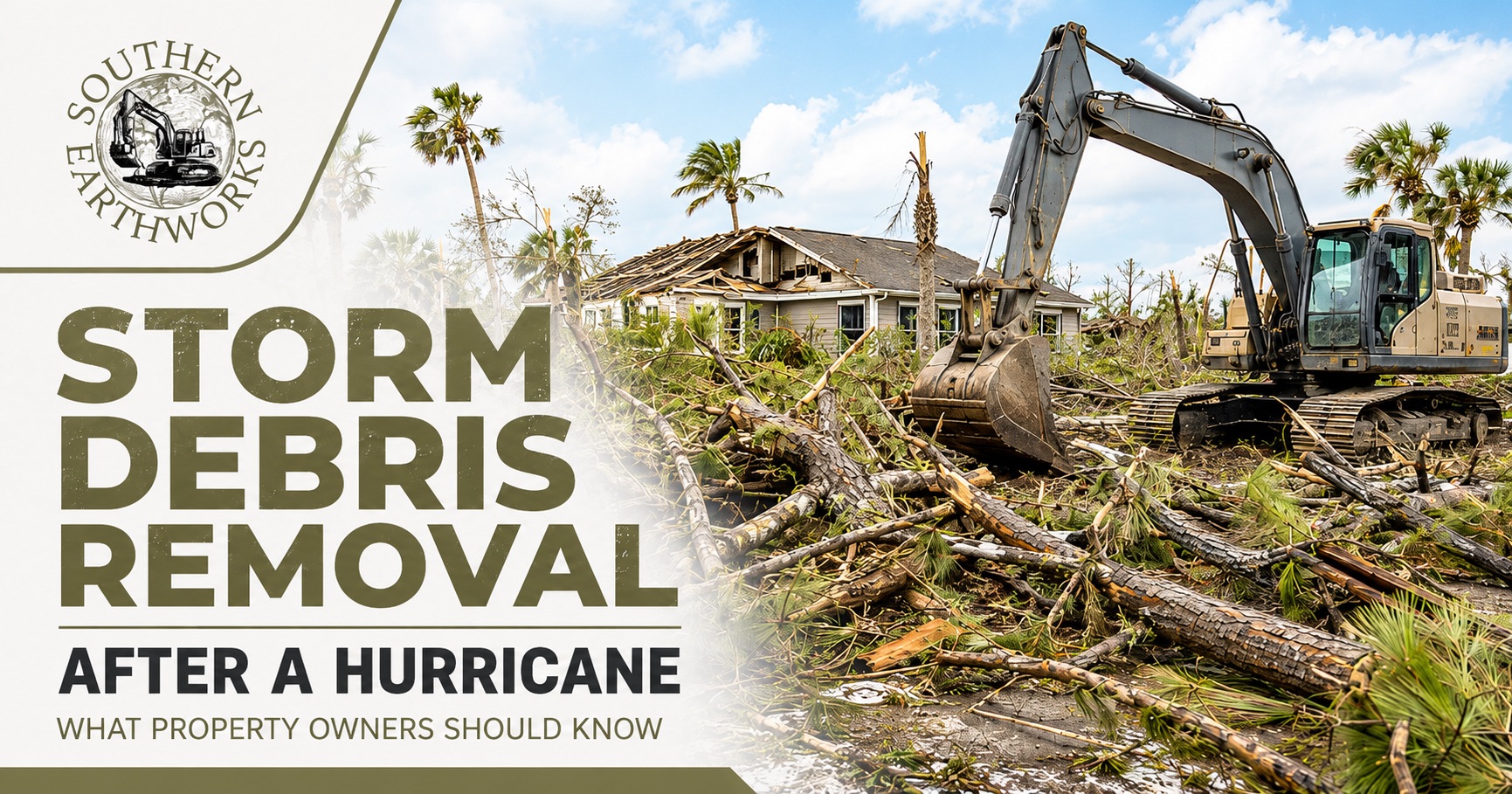
In Florida, hurricanes, tropical storms, high winds, and falling trees can leave small structures badly damaged. A shed or outbuilding with a compromised roof or framing may become increasingly unstable over time, which can create additional concerns for anyone walking or working nearby.
If a structure has suffered serious storm damage, property owners should avoid entering or attempting to dismantle unstable areas themselves. Professional demolition and debris removal can help clear the damaged structure and make the property usable again. For property owners throughout Northeast Florida, storm cleanup is often closely connected with demolition, land clearing, and site restoration, especially after significant weather events.
Why Professional Demolition Can Save Time and Frustration
It can be tempting to view a small building as a simple DIY demolition project, but the actual job can involve much more than expected. Removing roofing, framing, concrete, fasteners, electrical connections, and large quantities of debris can become time-consuming very quickly, and the work may require equipment that the average property owner does not have available.
A professional demolition contractor can evaluate the site, use the appropriate equipment, remove the structure efficiently, and handle the cleanup so the property is ready for whatever comes next. For many homeowners and businesses, that can save significant time while also reducing the risk of damaging other parts of the property.
Small Building Demolition for Nassau County and Northeast Florida
At Southern Earthworks, we work with homeowners, builders, contractors, businesses, and property owners who need more than just a structure torn down. We understand how demolition fits into the larger site-development process, and we can help evaluate the property with the next stage in mind.
If an old shed, barn, garage, outbuilding, damaged structure, slab, or other feature needs to be removed, we can determine the most practical approach and help with the site preparation that may follow. Our work throughout Nassau County and Northeast Florida also includes grading, excavation, debris removal, land clearing, and related earthwork, which allows us to help take a property from demolition through cleanup and preparation for its next use.
Planning a Demolition Project?
If you are preparing to remove a small structure from your property, having a plan before the equipment arrives can make the entire process easier. Utilities, equipment access, demolition debris, existing foundations, surrounding structures, drainage, and the future use of the site should all be considered before work begins.
Whether you need a demolition contractor in Nassau County, small building demolition in Northeast Florida, or help preparing a property for its next use, our team at Southern Earthworks is ready to help.
Contact Southern Earthworks or call us at 904.583.9908 to discuss your demolition and site-preparation project.



Leave A Comment