Construction and renovation projects can transform a property, but they can also put mature trees under significant stress. Excavation, grading, heavy equipment, trenching, soil compaction, and changes to drainage can all affect a tree’s roots and long-term stability.
For homeowners, builders, developers, and property managers in Northeast Florida, protecting valuable trees should be part of the project plan from the beginning. It’s not something addressed after construction has already started.
At Southern Earthworks Tree Services, we work with homeowners, builders, businesses, and property managers throughout Northeast Florida to help keep tree work safe and coordinated with the needs of the property. Our services include tree trimming and pruning, tree removal, tree inspections, arborist consultations, and commercial tree services.
Start Protecting Trees Before Construction Begins
One of the most important steps is also one of the easiest: identify the trees you want to preserve before equipment arrives.
Walk the property with your builder and tree professional and determine which mature trees could be affected by the project. Consider trees near the proposed home addition, driveway, pool, utility lines, retaining walls, patios, or other improvements.
An arborist can help evaluate the condition of existing trees and identify areas that need protection. The International Society of Arboriculture recommends involving an arborist early in the planning process because relatively small changes to a building or site plan can make a significant difference in whether a tree survives construction.
This is especially important with mature trees. A large, established tree may have considerable value to the property, but its root system can extend well beyond the visible trunk and canopy.
Protect the Tree’s Root Zone
When people think about protecting a tree during construction, they often think about protecting the trunk. That’s important, but the roots can be even more vulnerable.
Excavation, grading, trenching, paving, and changes to soil levels can damage roots. Heavy equipment can also compact the soil, reducing the air and water available to the root system. Some construction-related root damage may not become obvious until months or even years later.
That’s why construction traffic should be kept away from the tree’s designated protection area whenever possible.
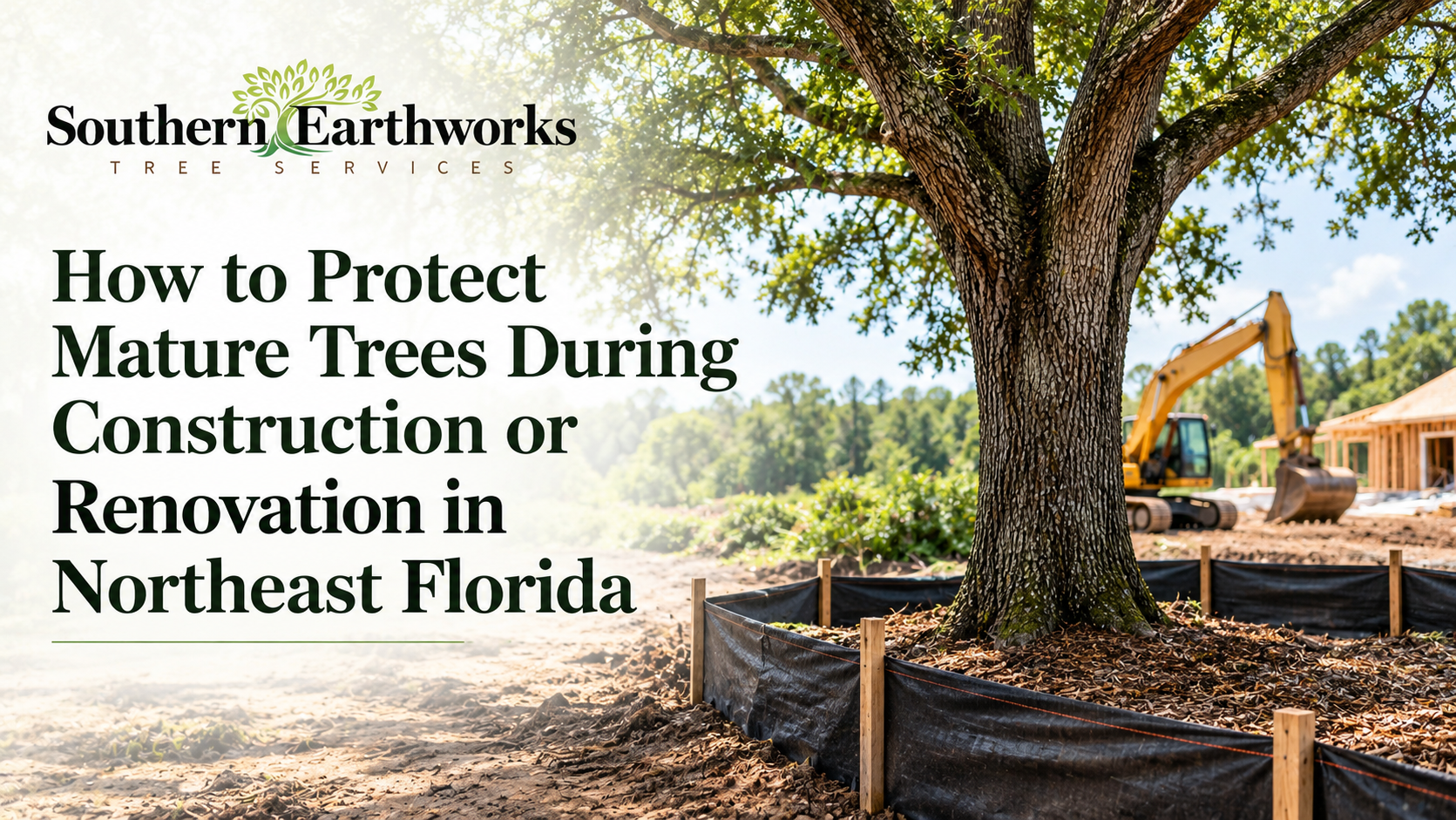
A tree protection zone can be established before work begins and clearly communicated to everyone working on the property. Fencing or other physical barriers can help prevent trucks, excavators, materials, debris, and foot traffic from entering areas where they could damage the tree’s roots.
Don’t Use Mature Trees as Construction Workspaces
It may seem harmless to stack lumber, construction materials, soil, or equipment beneath an existing tree. During a busy renovation, however, these areas can quickly become storage zones.
That can create several problems.
Heavy materials can compact the soil. Construction debris can damage exposed roots or the trunk. Soil piled against the base of a tree can interfere with the root collar and create additional stress.
The safest approach is to establish protected areas before construction begins and make it clear that those areas are not staging or storage locations.
Be Careful With Excavation and Trenching
Utilities are one of the biggest challenges when renovating around mature trees.
New electrical lines, plumbing, irrigation, drainage, gas lines, and other utilities may require excavation close to existing trees. Whenever possible, the project team should consider routing utilities away from important root zones or using less damaging installation techniques where appropriate.
If roots are encountered during excavation, don’t simply cut through them without professional guidance. The appropriate response depends on the size, location, and importance of the roots and the condition of the tree.
Planning utility routes before construction begins can often prevent unnecessary damage in the first place.
Watch for Changes in Grade and Drainage
Northeast Florida properties can already have challenging soil and drainage conditions. Construction can make those conditions more complicated.
Adding or removing soil around an established tree can affect its root environment. Changes in grading can also redirect water toward or away from the tree.
Too much water can create problems just as insufficient water can. Construction-related changes to drainage and soil conditions can stress roots and contribute to decline.
If you’re changing the grade of your yard, installing drainage, building a foundation, or adding a driveway near mature trees, include the trees in the planning process rather than treating them as separate from the project.
Protect the Trunk and Lower Branches
Roots aren’t the only part of a mature tree that can be damaged.
Construction equipment can scrape bark, break branches, or strike the trunk. Even seemingly minor wounds can create opportunities for decay and other problems.
Where equipment must operate near a tree, appropriate trunk protection and clearly defined equipment routes can help reduce the chance of accidental damage.
It’s also important to avoid parking machinery directly beneath valuable trees whenever possible. Construction activity can damage branches and compact the soil at the same time.
Don’t Over-Prune a Tree Just Because Construction Is Coming
Sometimes homeowners assume that removing a large amount of canopy before construction will make a tree safer.
Heavy pruning isn’t a substitute for proper tree protection.
If construction is going to remove some roots, aggressively cutting back the canopy isn’t necessarily the solution. The International Society of Arboriculture specifically cautions against thinning or reducing tree canopies simply to compensate for root loss.
Instead, have the tree evaluated and determine what pruning, if any, is actually appropriate for the tree and the project.
Consider an Arborist Consultation Before Work Starts
For particularly valuable or mature trees, an arborist consultation can be an important part of the construction planning process.
An arborist can help identify potential hazards, evaluate tree condition, recommend appropriate pruning, identify trees that may need to be removed, and provide guidance about protecting trees that will remain. Southern Earthworks offers arborist consultations and tree inspections as part of its Northeast Florida tree services.
The earlier that evaluation happens, the more options the project team generally has.
For additional homeowner information about construction and tree preservation, the International Society of Arboriculture’s TreesAreGood construction guidance is a useful resource.
What About Trees After Construction Is Finished?
Tree protection shouldn’t end when the contractors leave.
A mature tree may experience stress after construction even when there is no obvious damage. Watch for changes such as reduced or smaller foliage, branch dieback, premature color changes, or other signs of decline. Construction-related damage can sometimes take considerable time to become visible.
Post-construction care may include monitoring, appropriate watering, addressing drainage problems, correcting soil compaction, or having an arborist inspect the tree if concerns arise.
The goal isn’t simply to get a tree through construction. It’s to help preserve its health and structural integrity for years afterward.
Protect Your Mature Trees Before Your Next Project
If you’re building an addition, renovating your home, installing a driveway or patio, preparing a commercial property, or developing land in Northeast Florida, mature trees should be considered part of the project, not an obstacle to work around at the last minute.
Good planning can help protect valuable trees while allowing construction crews to work efficiently and safely.
Southern Earthworks Tree Services provides tree trimming and pruning, tree removal, stump services, arborist consultations, tree inspections, emergency tree service, and commercial tree services for properties throughout Jacksonville, Yulee, Fernandina Beach, Amelia Island, Nassau County, and Northeast Florida.
Call 904-583-9908 or request a free estimate to discuss your trees before construction or renovation begins.


Leave A Comment