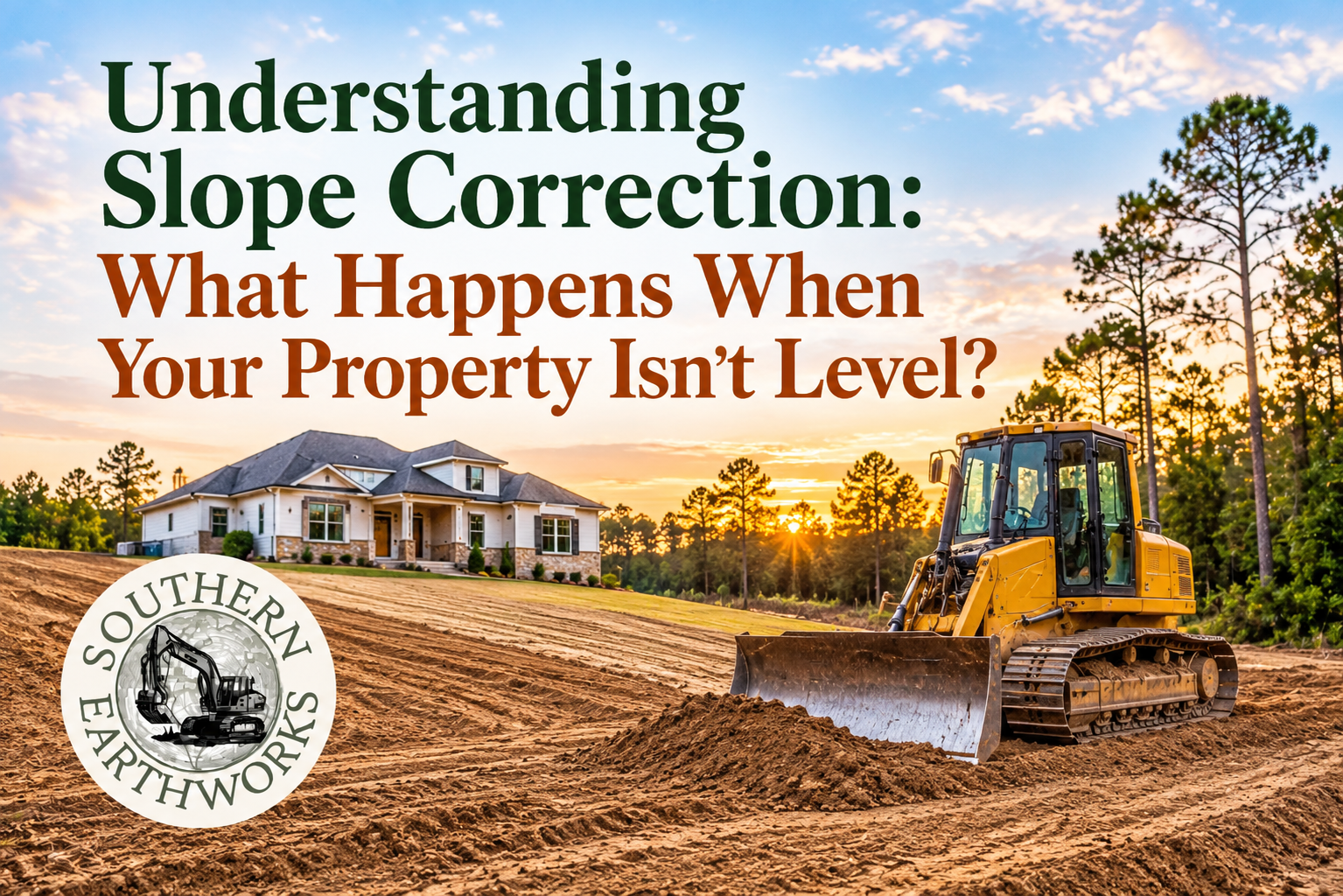
Not every property has perfectly level ground, and in many cases, that’s completely normal. Natural slopes and changes in elevation are part of the landscape. However, when uneven terrain begins interfering with drainage, construction plans, or the way you use your outdoor space, it may be time to consider professional grading.
A property that isn’t properly graded can create challenges for homeowners, builders, and developers. Water may collect in low areas, soil can begin to erode, and certain parts of the land may become difficult to access or use.
At Southern Earthworks, we provide professional grading, slope correction, land leveling, excavation, and drainage solutions throughout Northeast Florida. We understand how important proper site preparation is, whether you’re planning a construction project, improving your property, or addressing existing ground conditions.
Here’s what property owners should understand about slope correction and why getting the grading right matters.
What Does It Mean When a Property Isn’t Level?
Uneven terrain refers to differences in elevation across a property. Some areas may sit higher than others, creating gradual slopes, noticeable inclines, or low spots where water naturally collects.
These conditions can occur naturally or develop over time due to erosion, previous construction, soil movement, or changes made to the property.
Not every slope is a problem. In fact, properly designed slopes can help direct rainwater away from buildings and toward appropriate drainage areas.
Problems can arise when the existing elevations don’t support the property’s intended use or allow water to move where it should.
Some common signs of grading concerns include:
- Water collecting in low areas after rainfall.
- Soil washing away along sloped sections.
- Uneven ground that makes outdoor areas difficult to use.
- Areas where water appears to flow toward a building.
- Ground that has settled or developed noticeable depressions.
- Uneven surfaces that interfere with planned construction or landscaping.
Understanding the existing terrain is the first step toward determining whether grading or slope correction is needed.
How Slopes Affect Water Movement
One of the most important reasons to pay attention to property grading is drainage.
Rainwater naturally moves according to the elevation and contours of the land. When a property has an appropriate grade, water can flow toward designated drainage areas instead of collecting around structures or creating unwanted wet spots.
However, when slopes are too steep, poorly positioned, or interrupted by uneven ground, water movement can become a concern.
For example, a low section of a yard may collect water after heavy rain. Another area may allow runoff to travel too quickly across exposed soil, contributing to erosion.
In Northeast Florida, where properties can experience periods of heavy rainfall, understanding how water moves across the land is especially important.
Proper grading and drainage solutions can help address these conditions by improving the way water travels across a site.
It’s important to remember that simply adding soil to a low area doesn’t always solve the problem. The surrounding elevations, existing drainage patterns, and appropriate water outlets all need to be considered.
What Happens When a Property Has Too Much Slope?
Steep or uneven terrain can affect more than the appearance of a property.
Depending on the location and severity of the slope, it may create challenges for construction, landscaping, access, and everyday use.
Soil Erosion
When rainwater moves quickly down a slope, it can carry soil and other loose materials with it.
Over time, this may create channels, exposed areas, or uneven ground. Properties with disturbed soil or limited ground cover may be especially vulnerable to erosion.
Slope correction, soil stabilization, and appropriate grading can help address these conditions and create more stable surfaces.
Drainage Problems
A poorly positioned slope may direct runoff toward buildings, driveways, or other areas where water is not intended to collect.
Low spots can also develop where water remains after rainfall, making certain areas difficult to use.
Evaluating the existing grade helps determine whether land leveling, drainage improvements, or a combination of earthwork services may be appropriate.
Limited Usable Outdoor Space
Uneven terrain can make it difficult to use portions of a property.
For example, a steep backyard may limit where outdoor features can be placed, while an uneven area may make it challenging to prepare space for landscaping or other improvements.
Depending on the property and project goals, grading can help create more practical areas for the intended use.
Construction Challenges
Proper elevations are especially important when preparing land for construction.
If a building site has significant variations in ground level, additional grading or excavation may be needed before the next stage of work can begin.
A properly prepared site helps establish the intended foundation area and supports the broader construction process.
Does Every Property Need to Be Completely Flat?
No. This is an important distinction when discussing slope correction.
The goal of professional grading is not necessarily to eliminate every slope or make the entire property perfectly level. Instead, grading establishes elevations that support the property’s intended use while accounting for drainage and ground stability.
Some areas may need to be leveled for construction, while others may require carefully maintained slopes to direct water appropriately.
For example, a building pad may need a prepared, stable surface, while the surrounding property may require gradual slopes that help manage runoff.
The right approach depends on the existing terrain, soil conditions, drainage patterns, and what the property owner plans to accomplish.
At Southern Earthworks, we evaluate the project requirements to determine what type of grading and site preparation is appropriate.
When Should You Consider Professional Slope Correction?
Some grading concerns are easy to overlook until they begin affecting how you use your property.
If you notice recurring water accumulation, visible erosion, or uneven areas that interfere with a planned project, it may be time to have the property evaluated.
Professional grading may be worth considering when:
- Your yard regularly develops standing water after rainfall.
- Soil is washing away along sloped sections.
- You are preparing land for a new building or foundation.
- Uneven ground is interfering with landscaping plans.
- You need to create a more suitable surface for a planned improvement.
- Existing elevation changes are affecting drainage or property access.
- Previous earthwork has left the ground uneven or unstable.
A professional evaluation can help identify whether the issue involves grading, drainage, excavation, soil stabilization, or a combination of services.
Addressing the underlying condition is important. Simply filling a depression or moving soil without understanding the surrounding drainage can create additional problems.
What Is Involved in Professional Grading?
Professional grading involves more than moving dirt from one location to another. It requires understanding the existing elevations and how the finished property needs to function.
Depending on the project, grading work may involve several steps.
Evaluating the Existing Terrain
The first step is understanding the property’s current conditions. This includes identifying high and low areas, existing slopes, drainage patterns, and the locations where grading may be needed.
Determining the Desired Elevations
The intended use of the property helps establish what the finished ground should look like. A construction project, landscaping improvement, and drainage correction may each require different grading considerations.
Moving and Shaping Soil
Excavation and grading equipment can be used to reshape the ground, remove excess material from higher areas, or build up appropriate sections where additional elevation is needed.
Establishing Suitable Slopes
Rather than making every surface completely flat, grading helps establish the appropriate contours and elevations for the project.
Compacting and Stabilizing the Ground
Depending on the site requirements, soil compaction and stabilization may be important parts of preparing the finished surface.
The specific work varies from property to property. More involved construction projects may also require coordination with engineering plans, drainage requirements, or local permitting.
Why Proper Site Preparation Matters Before Construction
If you’re planning to build on your property, grading should be considered early in the preparation process.
Uneven ground, unsuitable elevations, and drainage concerns can complicate construction if they’re not addressed before the next phase begins.
Preparing the site properly helps establish the conditions needed for foundation work, access, and other improvements.
At Southern Earthworks, our earthwork and site preparation services include grading, excavation, land clearing, drainage solutions, soil stabilization, and foundation preparation.
Whether you’re preparing a residential property or a larger commercial development, we understand the importance of starting with ground conditions that support the project ahead.
You can learn more about our earthwork and site preparation services to see how we help prepare properties throughout Northeast Florida.
Why Professional Grading Is Important for Northeast Florida Properties
Properties throughout Northeast Florida can have different elevations, soil conditions, drainage patterns, and site requirements.
A grading approach that works for one property may not be appropriate for another.
Heavy rainfall, existing low areas, exposed soil, and changes made during previous construction can all influence how water moves across a property.
It’s also important to consider neighboring properties and established drainage systems. Grading should not simply redirect unwanted runoff somewhere else. The appropriate drainage path and any applicable site requirements need to be considered before soil is moved.
For projects in Nassau County and surrounding communities, local grading and drainage requirements may also apply. Larger or more involved projects may require plans or coordination with the appropriate professionals and local authorities.
Taking these factors into account helps ensure the finished site is prepared for its intended purpose.
Get Professional Grading and Slope Correction From Southern Earthworks
Uneven terrain doesn’t always mean there’s a serious problem, but when slopes begin affecting drainage, construction, or usable outdoor space, addressing the underlying conditions can make a meaningful difference.
At Southern Earthworks, we provide professional grading, slope correction, land leveling, excavation, soil stabilization, and drainage solutions for residential, commercial, and industrial properties.
Our team works with homeowners, builders, contractors, and developers throughout Northeast Florida to prepare land for construction, landscaping, and other property improvements.
Whether you need to correct an uneven area, prepare a building site, or address grading concerns, we’ll help you determine the appropriate next steps for your property.
Visit our earthwork and site preparation page to learn more about what we do, or request a free estimate to discuss your project.
Call Southern Earthworks at 904-583-9908 to get started.



Leave A Comment